CHRO’s Are Responsible: To Rebuild Human Connection in Companies
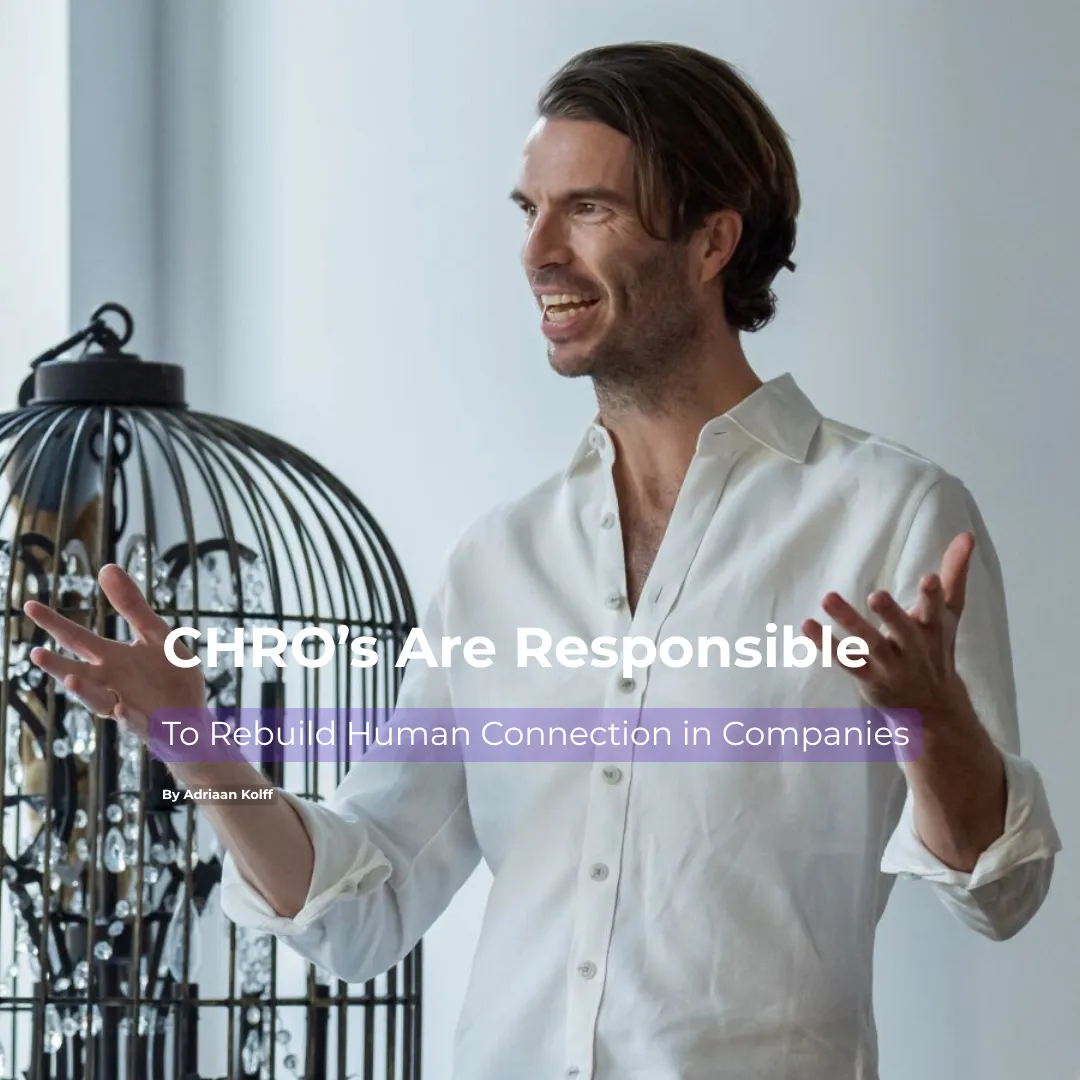
CHRO’s Are Responsible: To Rebuild Human Connection in Companies
Over the past decade, work has become more distributed, more digital, and more mediated by technology. Remote and hybrid models have expanded rapidly, collaboration tools have multiplied, and many organizations have embraced efficiency and flexibility as defining principles of modern work. These shifts have delivered real benefits, but they have also quietly weakened something that was once taken for granted: everyday human connection at work.
In many companies, offices are no longer natural gathering places. Teams meet infrequently in person, if at all. Colleagues who work together for years may never share the same physical space. Interactions are scheduled, transactional, and optimized for speed rather than presence. Over time, this changes how people experience their work and how connected they feel to the organization behind it.
This dynamic is particularly visible in technology heavy companies, where digital tools are not only a means of collaboration but also the product itself. As work becomes increasingly abstract and mediated through screens, the social fabric that once formed organically begins to thin. What remains are efficient systems supported by individuals who may feel increasingly isolated from one another.
The human need, however, does not change. People still want to belong to something larger than themselves. They want to feel seen, understood, and valued beyond their output. They want relationships that extend beyond task completion and shared calendars. These needs are not sentimental. They are fundamental, and they persist regardless of how advanced technology becomes.
As automation and AI take on more tasks, this tension becomes more pronounced. The more work is handled by systems and agents, the more people look to human relationships for meaning and grounding. When those relationships are weak or absent, disengagement follows quietly. Not as open dissatisfaction, but as emotional distance.
For a long time, connection at work was treated as a byproduct of proximity. When people shared offices, commuted together, and spent unstructured time around one another, relationships formed without deliberate design. That context no longer exists in many organizations. Expecting connection to emerge on its own is no longer realistic.
This shifts responsibility squarely onto leadership, and particularly onto CHRO’s. Designing for connection is now as important as designing for performance, compliance, or efficiency. It requires intentional choices about how people interact, how communities are formed, and how shared experiences are created across roles and locations.
This is not about forcing social interaction or recreating the office culture of the past. It is about recognizing that human connection is an input to organizational health, not an optional outcome. Internal communities, meaningful moments of togetherness, and spaces for informal exchange become strategic tools rather than nice additions.
In technology focused organizations, this work is often underestimated. There is a tendency to believe that strong products, compelling missions, or advanced tools can compensate for weaker interpersonal bonds. Over time, this assumption proves costly. Trust erodes more easily. Collaboration becomes brittle. Retention suffers, not because people dislike their work, but because they no longer feel anchored to the people they work with.
CHRO’s are uniquely positioned to address this gap. Unlike line leaders, they operate across functions, geographies, and seniority levels. They can see where connection is breaking down and where it still holds. More importantly, they can influence how the organization invests time, energy, and attention in rebuilding it.
Designing for connection means creating opportunities for people to meet with purpose, not just agenda. It means supporting shared experiences that cut across silos and hierarchy. It means treating internal communities as assets that deserve care and continuity, rather than as informal initiatives that depend on individual enthusiasm.
This perspective also shapes how I think about the role of external partners. At Matchr, we have seen firsthand how intentional connection changes the way people experience work. Through the talent dinners we host and the peer relationships we facilitate, we see how quickly trust and openness can form when people are brought together with care and intent.
These principles translate directly into organizational life. The same attention to environment, group composition, and shared context that makes those gatherings meaningful can be applied inside companies. It is not about scale for its own sake. It is about depth and relevance.
Matchr operates at the intersection of technology and human judgment, and that perspective carries into how we partner with companies. We understand the operational realities of modern, tech enabled organizations, but we are equally aware of what is lost when the human core is neglected. That balance is increasingly difficult to maintain internally, and increasingly valuable when it is achieved.
The future of work will undoubtedly involve more automation, more distributed teams, and more intelligent systems. What it cannot afford to lose is the sense of human connection that makes work meaningful and sustainable. For CHRO’s, protecting and rebuilding that connection is no longer a cultural initiative on the side. It is central to the role.
Organizations that invest deliberately in human connection will find it easier to navigate change, retain trust, and sustain performance over time. Those that do not may remain efficient, but increasingly hollow. The responsibility for keeping work human belongs to those who lead the people function.
Adriaan Kolff, CEO Matchr