How to Make Meaningful Connections
How to Make Meaningful Connections
There’s a version of networking that feels transactional, exhausting, and honestly a bit fake.
And then there’s networking that feels authentic and real.
Whether you like it or not, you need others to succeed in your life.
When you’re stuck, you need a friend who tells you the truth. When you’re leveling up, you need mentors, peers, and people who pull you into new rooms. And when life hits health, heartbreak, or a hard season, you need your people. No one does the important stuff alone.
I’ve learned this the hard way. And over time, I started to notice patterns that consistently work.
This is the six-step approach I use to build meaningful connections, in business and in life.
1. Be vulnerable and authentic
This is where it starts.
When you show up as you are supposed to be, or as a different person at work versus who you are at home, people will keep you at a distance. When you show up as a human, people open up. And that’s where real connection begins.
A practical example from the early days of Matcher: I struggled to hire the right people. So I went to my head of recruitment and asked, straight up, “How can we do this better?”
Her response surprised me. She told me she didn’t even realize it was an issue because she assumed I was naturally extroverted and would “just make it happen.” That moment changed everything. We sat down together, went through her LinkedIn, and that’s how we hired the next four to five employees.
The point is not “share your trauma on LinkedIn.”
The point is: be honest enough that people feel safe being honest back.
2. Do something interesting (for real reasons)
You don’t need to “build a personal brand.” You need to live a life that creates stories.
Think about your friend group. There’s always that one person who does something slightly crazy. They go on that trip, start that project, pick up that odd hobby, run that race. And when they come back, everyone leans in.
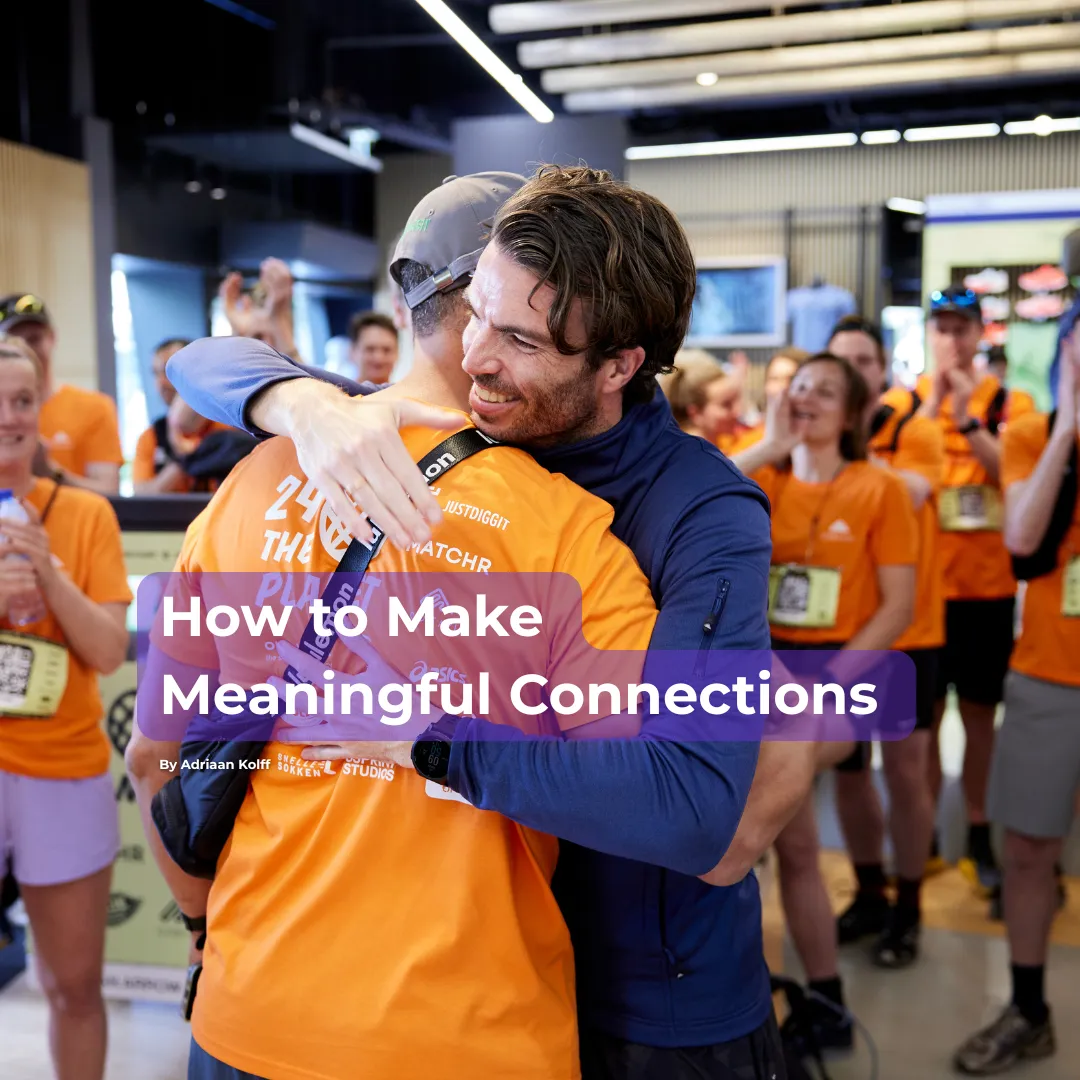
For me, it’s walking for 24 hours.
It’s not interesting because it’s a marketing trick. It’s interesting because it’s hard. It’s memorable. It gives people a reason to ask questions. And once someone is genuinely curious, the conversation shifts from small talk to something real.
If you’re early in your founder journey and you don’t have “success” yet, that’s fine.
Ask yourself: what else can you bring to the table? What’s unique about your story, your product, your network, your obsession?
3. Go outside your comfort zone on purpose
Most people network by staying inside their safe little bubble.
Same friends. Same events. Same circles.
But opportunity often lives in second- and third-degree connections. The wider your first-degree network is, the bigger your second-degree network becomes.
One of my favorite examples: I joined a swim class to prepare for an Ironman. Random decision. In that class was the head of recruitment for a well-known tech company. We started talking. Two months later, that person became a top client.
That didn’t happen because I had the perfect pitch.
It happened because I put myself in a new environment with new people.
Go to the conference. Join that pottery class. Attend that networking dinner where you don’t know anyone. Say yes to the birthday party of your partner’s friend.
And ideally: do some of these things alone, so you’re forced to talk to people you don’t already know.
4. Be a magnet, not a hunter
There’s a big difference between chasing people and attracting people.
You become a magnet when you let people know what you’re doing. Not in a “look at me” way, but in a “this is what I’m building and learning” way.
Share what’s going on in your world.
Over time, the right people will notice. They’ll come to you. And when they do, the dynamic is completely different. It’s not sales. It’s curiosity.
5. Be known for something
This one is simple, but not easy: build professional credibility.
Ask yourself: if you had to choose, would you work with someone who’s lazy, doesn’t follow up, and leaves you guessing whether they’ll actually get it done? Or would you pick the person who’s on time, consistent, open-minded, genuinely nice to work with, and reliably delivers?
Be that second person.
Professional credibility is a super skill. If you want to progress in your career (and as a founder), it’s one of the highest-leverage things you can build.
6. Become a super connector
This is the cheat code.
When you meet someone interesting, don’t just think: “How can this person help me?”
Think: “Who in my network should meet this person?” Make the introduction. Connect the dots. Be the spider in the web.
A lot of magic happens when you become known as the person who opens doors for others. It builds trust fast. And it creates a reputation that spreads without you having to push it. Why this matters more than people admit
I believe “your network is your net worth,” but not in the shallow Instagram-quote way.
There’s something deeper underneath it: the Law of Association.
If your closest circle is ambitious, disciplined, healthy, curious, and building things, you will move in that direction too.
To grow in your career, your company, your health, or your personal life, you need people. You don’t do this alone. And it becomes a lot more fun when you stop trying to “network” and start building real relationships.
A question to leave you with
What do you do that’s genuinely interesting? Not “interesting for LinkedIn.” Interesting in real life.
Because when you combine that with authenticity, action, and generosity, meaningful connections stop being something you “try” to do.
They become a byproduct of how you live.
Adriaan Kolff, CEO Matchr